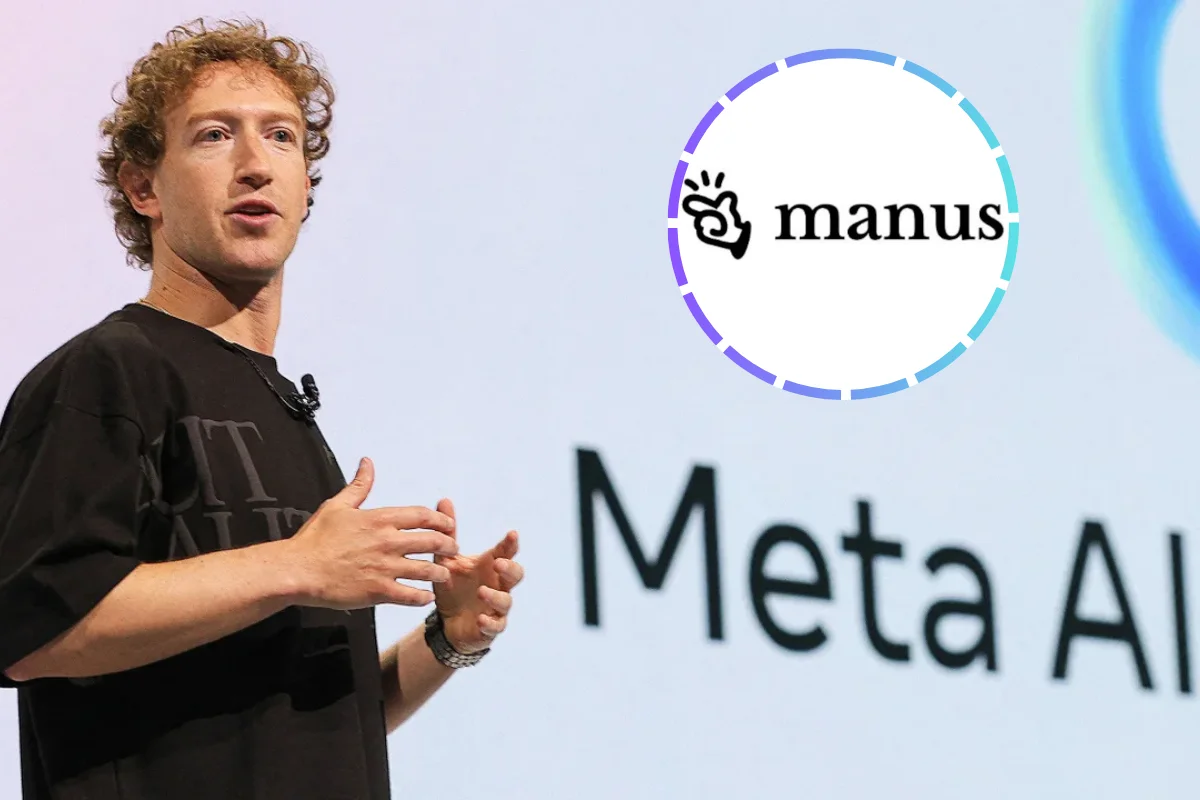
China has blocked Meta’s acquisition of Manus, an AI startup with Chinese roots and Singapore-based operations.
reported that Meta had already completed the deal in December 2025 for more than $2 billion, but China’s National Development and Reform Commission later ordered the parties to withdraw from the acquisition. AP also reported that the Chinese statement did not name Meta directly, but said foreign investment in the Manus project would be prohibited.
That detail matters.
This does not look like a normal pre-deal review. It appears to be a rare case where regulators moved after the acquisition had already happened.
Manus is not just another chatbot company. It is known for AI agents — software designed to complete multi-step tasks with less human input than a standard chatbot. That makes the deal more sensitive, because AI agents are becoming one of the next major battlegrounds in tech.
China is not happy with the Meta-Manus deal
The bigger question is whether governments will start treating AI agent startups the way they already treat chip companies, defense suppliers, or other strategic technology assets.
For Meta, this could make AI talent acquisitions more difficult. For startups; it raises another issue: moving operations overseas may not fully protect a company from regulatory control if its founders, early IP, or original business roots are still tied to China.
There is also a wider US-China angle here. Both countries already treat advanced AI as a national priority. If AI agents become important for business, defense, research, and automation, cross-border acquisitions may face much more scrutiny.
So the real story may not be only Meta losing a deal.
It may be the start of a stricter era where AI startups are no longer treated like normal software companies.
What part of this seems realistic, and what sounds overhyped?