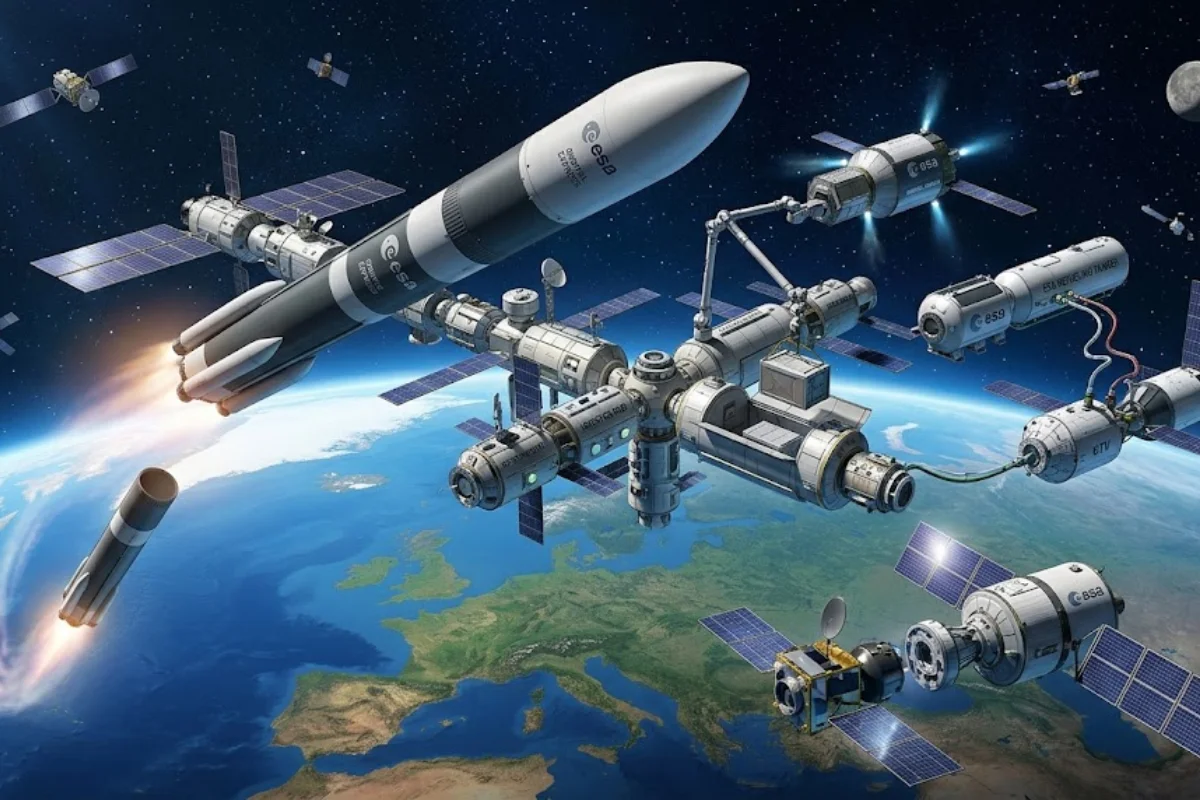
The European Space Agency recently published an update on its Future Launchers Preparatory Programme, which focuses on what space transportation may look like beyond traditional rocket launches.
The interesting part is that ESA is not only talking about launch vehicles. It is also discussing in-space logistics, orbital refuelling, cargo handling, reusable launch systems, and standards that could let spacecraft connect and operate together in orbit.
Europe’s future in space transportation
That points to a bigger future question: space may be moving from single-use missions toward something closer to an orbital transportation network.
If refuelling, storage, cargo transfer, and reusable vehicles become reliable, future missions could be planned differently. Satellites might be serviced instead of abandoned. Spacecraft could be refuelled instead of replaced. Larger lunar or deep-space missions might be assembled through repeatable logistics rather than launched all at once.
At the same time, this is still early-stage infrastructure planning. It is not the same as having a working orbital supply chain today.
What part of an in-orbit transportation economy seems realistic over the next decade, and what still sounds overhyped?