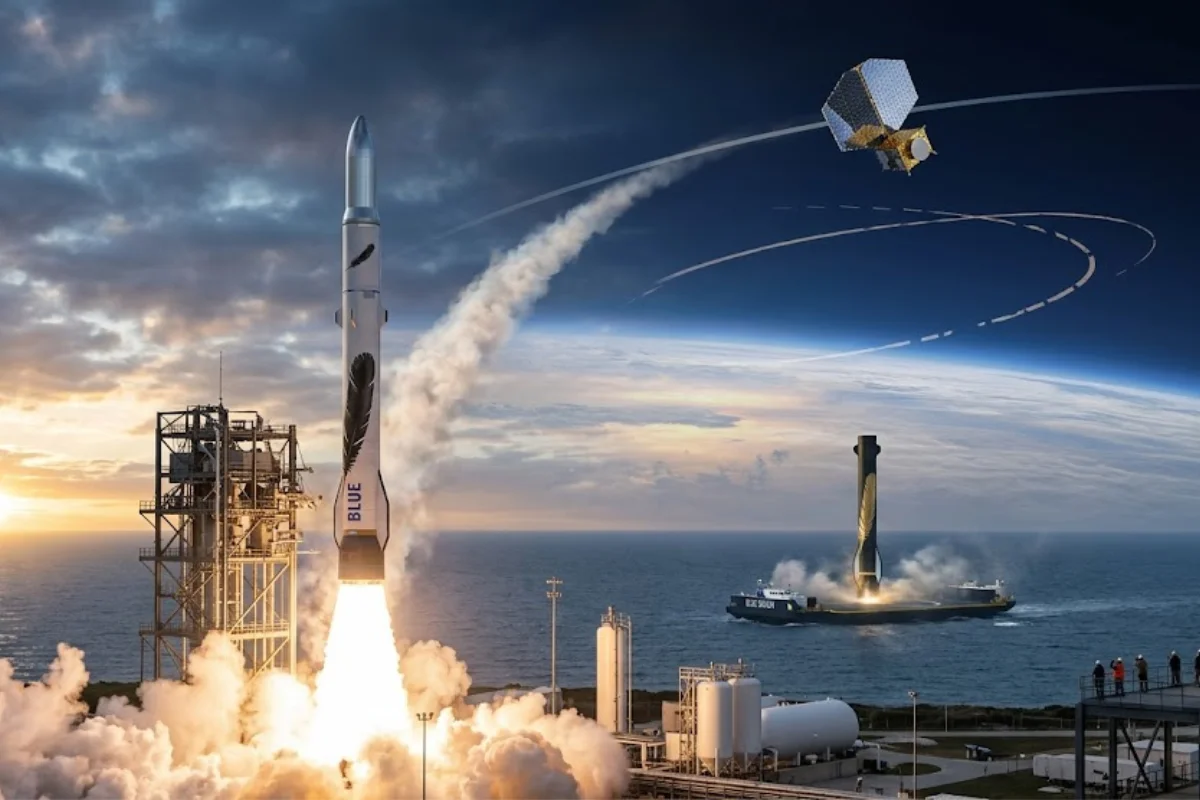
Blue Origin just showed why the future of space launch will not be shaped by clean wins alone. New Glenn’s third mission lifted off on April 19 and its first stage landed successfully. That was a real step forward for reusability. But the same flight missed its main goal when the upper stage failed to place AST SpaceMobile’s BlueBird 7 satellite into the planned orbit.
That split result matters because it captures the next phase of the private space race. The challenge is no longer just getting a giant rocket off the pad. It is proving that reusable systems can also deliver customer payloads with the kind of reliability that future space infrastructure will need. A company can create a huge technical moment with a booster landing. But if the payload does not reach the right orbit then the mission still falls short.
This feels especially important because the lost payload was part of AST SpaceMobile’s direct to cell network plans. The company says its next generation BlueBird campaign is ramping up with launches every one to two months on average and is targeting 45 to 60 satellites by the end of 2026. If that kind of system is part of the future of mobile coverage then launch reliability becomes part of the future of communication itself.
Replay: New Glenn Mission NG-3 Webcast
The FAA has already required a mishap investigation into the second stage event. That is routine after a failure like this. But it also points to a bigger future question. As more broadband networks and commercial services depend on orbital launches, how much failure can the system absorb before delays start slowing real world progress on connectivity and access.
A strong futurology debate here is not about whether Blue Origin had one bad day. It is about what will matter more in the next decade of space. The company that moves fastest. Or the company that becomes reliable enough to act like real infrastructure. Reuse can cut costs. Reliability builds trust. The companies that shape the 2030s may need both.